There are three main fermentation processes for organic fertilizer factories in China, namely stack composting, trough composting, and fermentation tank fermentation process.
1、 Stacked compost:
1. Temperature requirements. The starting temperature should be above 15 ℃ (suitable for operation in all seasons, not affected by seasons, and fermentation should be carried out indoors or in greenhouses as much as possible in winter)
2. Material stacking. When making piles, it is not advisable to make them too small or too short, as they can affect fermentation. Piles with a height of 1.5 to 2 meters, a width of 2 meters, and a length of 2 to 4 meters or more have better fermentation effects
3. Flip over and ventilate. During the fermentation process, pay attention to appropriate oxygen supply and flipping (flipping several times when the temperature rises to 75 ℃ or above). The temperature should be controlled at around 65 ℃, as too high a temperature can affect nutrients
4. Fermentation is complete. Fermentation is complete, the material turns black brown, and the temperature begins to drop to room temperature, indicating fermentation is complete If there are too many auxiliary materials such as sawdust, sawdust, and rice husks, the fermentation time should be extended until they are fully decomposed
5. Proportion. 1.5 tons of raw materials (about 2.5 tons of fresh feces) plus 1 kg of fertilizer starter. The starter should be mixed with rice bran (or bran, corn flour and other substitutes) in a ratio of 1:5, then evenly sprinkled into the raw material pile, and mixed evenly.
The advantages and disadvantages of strip stack composting: strip stack composting occupies a large area; Low construction cost, only requires a flat piece of land, which can also be hardened; Low degree of automation; There are many types of flipping equipment, with simple installation and debugging, and low cost. Taking all factors into consideration, stack fermentation is suitable for pre-treatment of materials that are too tight, small-scale production, production of fertilizers for farm use, poor site conditions, or temporary production without fixed production sites.
2、 Trough composting:
1.5 tons of raw materials (about 2.5 tons of fresh feces) plus 1 kg of fertilizer starter. The starter should be mixed with rice bran (or bran, corn flour and other substitutes) in a ratio of 1:5, then evenly sprinkled into the raw material pile, and mixed evenly.
The flipping work of each fermentation tank is completed by one fermentation turning machine and a tank changing truck. Every day, organic solid waste is mixed with auxiliary materials such as plant straw and fermentation agents according to the formula requirements. After being thoroughly mixed by a forced mixer, it is evenly sent to the front end of each fermentation tank (1/8 of the original empty tank front end or 1/8 of the tank front end released after flipping) by a shovel, and flipped twice a day. The fermentation material is piled up in the pool with a thickness of 1.5-1.6 meters. It is subjected to continuous aerobic fermentation by using high-pressure fans for forced ventilation and the oxygen provided by the contact between the material and the air during flipping, which enables the fermentation material to quickly mature, sterilize, deodorize, dehydrate, and dry. The fermentation cycle is 7-8 days. Every day, the fermented materials are transported away from the end of the fermentation tank, and the space left at the front of the fermentation tank is replenished with new fermented materials, thus forming a continuous aerobic fermentation process. The fermentation and flipping process has achieved fully automatic and intelligent control. After fermentation in the organic fertilizer production line, the materials are further decomposed and dehydrated, and then screened to obtain powdered finished organic fertilizer or as raw material fertilizer for granulation of granular organic fertilizer.
Advantages and disadvantages of trough composting fermentation: relatively small footprint; high construction cost, requiring the construction of fermentation tanks; High degree of automation and thorough decomposition; The trough type flipping machine needs to be customized according to the trough width, and the installation cost is relatively high.
Trough fermentation is suitable for: fine scale production, materials that are not excessively sticky, strict requirements for reducing labor and land costs, and large-scale fertilizer manufacturers.
3、 Fermentation tank fermentation
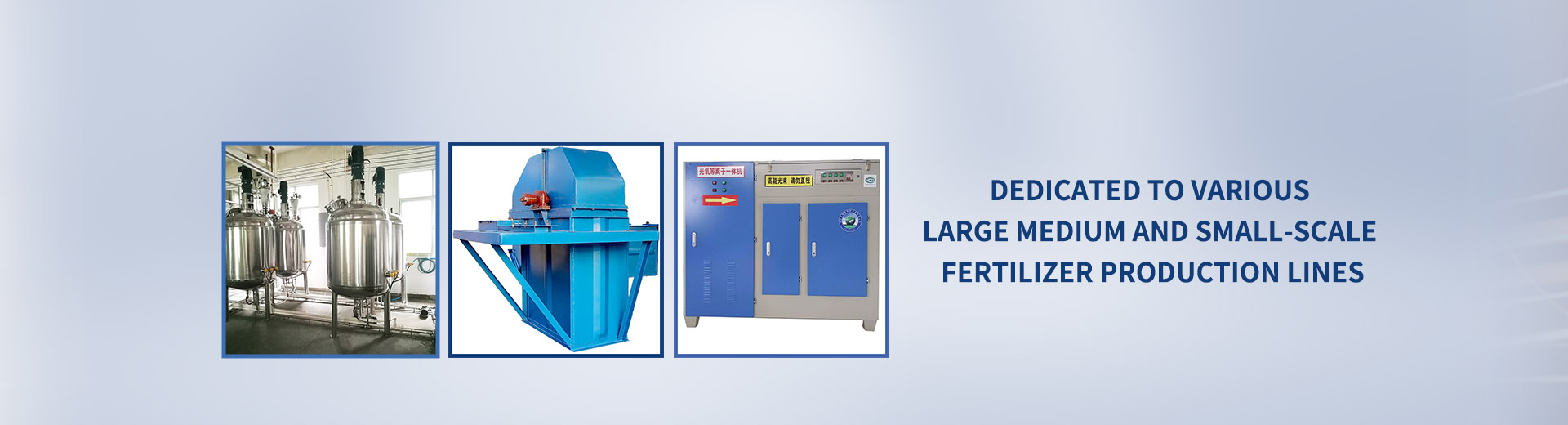
The aerobic fermentation tank equipment mainly consists of a fermentation chamber, a feeding lifting system, a high-pressure air supply system, a main shaft transmission system, a hydraulic power system, an automatic discharge system, a deodorization system, and an automatic control system. The process flow includes four steps: mixing and conditioning, feeding, aerobic fermentation, and automatic feeding.
1. Mixing section
The mixing part is to mix feces or organic waste with a high moisture content of about 75% with reflux materials, biomass, and fermentation bacteria in a certain proportion to adjust the moisture content C:N、 Breathability, etc., to achieve fermentation conditions. If the moisture content of the raw materials is between 55-65%, they can be directly fermented in tanks.
2. Aerobic fermentation tank section
This process can be divided into rapid heating stage, high temperature stage, and cooling stage.
The material enters the fermentation tank and rapidly decomposes under the action of aerobic bacteria within 24-48 hours, releasing heat that causes the temperature of the material to rise rapidly. The temperature is generally between 50-65 ℃, and can reach up to 70 ℃. By using an air supply aeration system to evenly supply oxygen into the fermentation tank, the oxygen demand during the fermentation process is met, allowing the material to fully ferment and decompose. The high temperature stage is maintained for 5-7 days. When the decomposition rate slowly decreases, the temperature gradually drops below 50 degrees. The entire fermentation process lasts for 7-15 days. The temperature rise and ventilation oxygenation accelerate the evaporation of material moisture. The exhaust gas and water vapor are treated by a deodorizer through a deodorization system and discharged, thereby reducing the volume of the material and achieving the goal of reducing, stabilizing, and harmless treatment of the material.
Maintaining a temperature above 50 ℃ in the fermentation chamber for more than 7 days can effectively kill insect eggs, pathogens, and weed seeds. To achieve the goal of harmless treatment of feces.
3. Automatic feeding section
The materials in the fermentation chamber are mixed by the main shaft and fall layer by layer under the action of gravity, and after fermentation, they are discharged as organic fertilizer raw materials.
Advantages of aerobic fermentation tank equipment
1. Utilizing high-temperature fermentation technology with biological bacteria, with low operating costs;
2. Main insulation design, auxiliary heating to ensure normal operation of equipment in low-temperature environments;
3. Achieve gas emission standards through biological deodorization equipment, without generating secondary pollution;
4. The main body of the equipment is made of special stainless steel material, which reduces corrosion and has a long service life;
5. Small footprint, high degree of automation, one person can complete the entire fermentation process;
6. The processed materials are used as organic fertilizer raw materials to achieve the resource utilization of organic waste.
The disadvantage is also very obvious, the equipment cost of the fermentation tank is high.
RSS | Website Map | XML

Copyright©2025 Hongfazhongji.com Tai an Zhonglan Xuye Environmental Protection Technology Co., Ltd All Rights Reserved
Support:FEIXUN.CC
